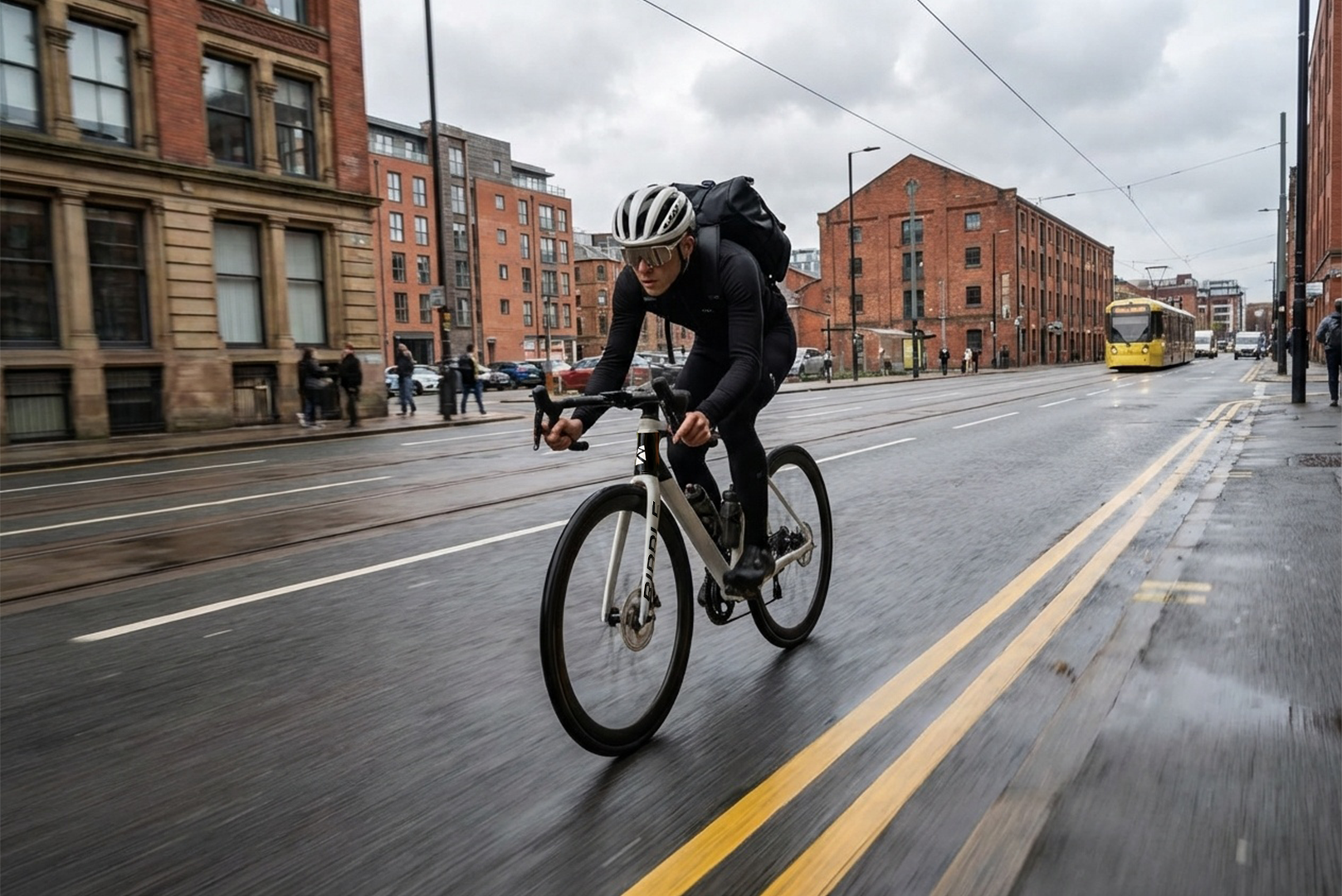
Commuting: Your Daily Training Opportunity
Getting it done...
Around 6.7% of British workers cycle to work regularly, and many have discovered ways to make these necessary journeys contribute meaningfully to their fitness goals. Rather than treating commuting as separate from training, they've found approaches that serve both purposes effectively.
Making commute miles count for training
A typical commute provides 7-10 hours of potential riding time per week, which represents substantial training volume for most cyclists. The challenge lies in making these miles contribute to your fitness development rather than simply covering distance.
During periods focused on building base fitness, commute rides work well as steady endurance efforts. Maintaining consistent pace and effort throughout the journey can accumulate substantial training volume, with your TrainingPeaks or Strava data showing meaningful weekly totals.
When your training includes intensity work, commutes can accommodate structured efforts with some planning. Natural features like hills, longer uninterrupted sections, or even traffic light intervals can provide opportunities for focused efforts within your daily transport needs.
Using daily rides to monitor fitness
Commute consistency makes these rides excellent for monitoring your fitness development and recovery status. Riding the same route daily provides a standardized test that reveals changes in your conditioning over time.
Morning commute data often indicates how well you've recovered from previous training. Higher than usual heart rate for familiar power outputs might suggest you need additional recovery, while feeling strong on familiar efforts indicates good adaptation.
The environmental consistency of commuting the same route helps isolate fitness changes from other variables. Comparing your power output, heart rate response, and perceived effort over weeks reveals training adaptations that might be less obvious in varied weekend rides.
Route strategy for different training needs
Experienced commuter-trainers often develop multiple route options that serve different training purposes while still getting them to work reliably. A direct route prioritizes time efficiency, while alternatives might include additional distance or specific terrain features.
Route selection can match daily training objectives. Recovery days might call for the most direct, gentle path, while days requiring intensity work could use routes with hills or sections allowing sustained efforts.
Traffic patterns significantly influence training opportunities within commutes. Earlier departures often provide better conditions for sustained efforts, while later travel might require adapting to stop-start patterns that suit different training goals.
Managing training load and recovery
Integrating commute training requires careful attention to total training stress and recovery needs. High-intensity commute sessions must fit appropriately within weekly training plans to avoid accumulating excessive fatigue.
Work stress can affect training quality and recovery, making flexible approaches to commute intensity valuable. Some days might call for easy rides, while others provide opportunities for quality training efforts.
Recovery rides to and from work can be particularly effective, providing gentle movement that aids recovery while accomplishing necessary transport. Many find these easier efforts help manage stress from both work and training.
Building long-term commute training habits
The reliability of commute training helps maintain fitness through busy periods when other training might be difficult to schedule. This consistency often produces steady, sustainable improvements in fitness and cycling skills.
Weather experience gained through daily commuting builds confidence and skills that benefit all cycling activities. Regular exposure to varied conditions develops adaptability that serves you well in events and recreational rides.
Commute training often proves more sustainable than purely recreational approaches because it serves multiple purposes. The practical necessity of getting to work provides motivation that purely optional training sometimes lacks.
Image: Long-term fitness progression chart showing sustained improvement through commute training
Effective commute training doesn't require dramatic changes to your route or schedule. Small adjustments to effort level, route selection, and equipment can transform necessary transport into valuable training time that supports your broader cycling goals.
Explore our full range of commuter bikes and level up your daily ride.
FAQ's
How do I turn my cycle commute into quality training?
Treat familiar roads like a session. Add short blocks of controlled effort, keep one direction easy, and use the return leg for tempo or hill efforts. Track progress by time on section, heart rate or perceived effort, then cool down before you arrive so you start the day fresh.
Is commuting by bike enough to improve fitness?
Yes. Consistent rides build aerobic fitness, strength and resilience without needing long sessions. Aim to ride little and often, extend one route by 10 to 20 minutes when time allows, and keep at least one easy day each week so fitness rises without leaving you drained.
What training works on a short or stop start commute?
Use bite size efforts that fit between junctions. Climb steady on rises, ride tempo on longer clear sections, and sprinkle in a few short sprints or high cadence spins when traffic is light. If lights interrupt a block, pause the effort, roll easy, and pick it up safely when the road opens.
What bike and kit are best for commuting and training?
Choose a reliable bike with room for wider tyres and full mudguards so you can ride year-round. Go for tyres with puncture protection, carry lights front and rear with a backup set, and keep spares plus a mini tool on the bike so training plans are not derailed by niggles.
Can an e-bike commute still count as training?
Absolutely. You still pedal and can choose how hard to work by adjusting assist to stay in your target zone. Use lower assist on flats to lift effort, bump it up on hills to manage sweat, and focus on smooth cadence and good posture so technique improves alongside fitness.

SPORTFIT: Why Flatbar Bikes Might Be Right For Your
Flat bars just make riding feel easy again. No ego, no overthinking, just control, comfort, and a bike you actually want to use every day. If you want riding to feel simpler, more natural, and way more enjoyable, this is worth a read.

Commuting: Your Daily Training Opportunity
About 6.7% of British workers cycle to work and many turn these commutes into effective training sessions, combining fitness goals with daily travel.
Steel is real for Oli, our Clitheroe Store Manager

Radio 1 DJ Scott Mills spins wheels instead of discs